
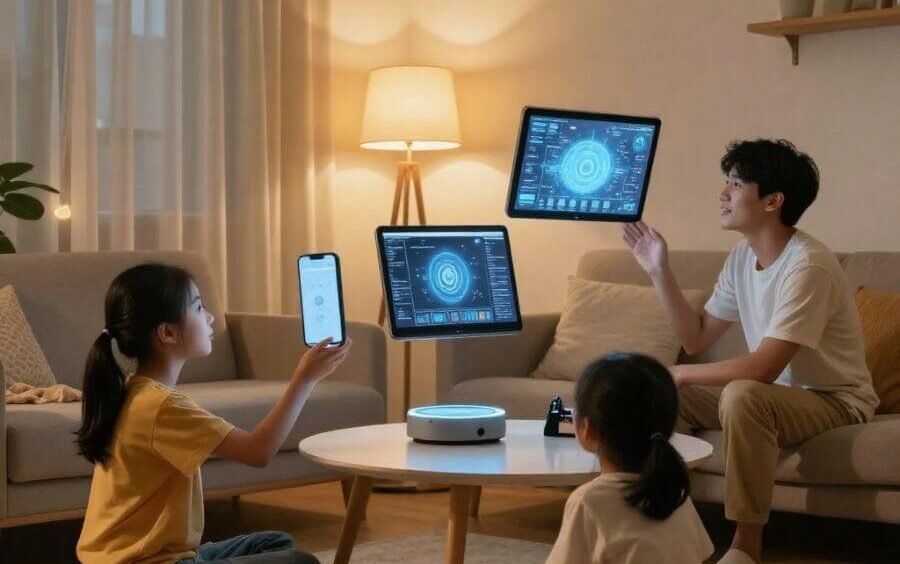
You probably don’t realize how many AI gadgets in daily life you already use. They’re in your pocket. They’re in your kitchen. They’re sitting in your living room right now.
Think about it. Your smart speaker adjusts your morning alarm. Your watch tracks your heart rate on a run. Your phone recognizes your face before you even unlock it. All of this runs on AI. It works quietly in the background. You barely notice it.
These aren’t futuristic gadgets anymore. They’re normal. They’re affordable. And they’re already changing how millions of homes run every day.
Over the past two years, AI-powered devices have gone from novelty to default everything from cheap smart plugs to expensive wearables. Here’s the pattern that’s emerged: the gap between “gimmick” and “genuinely useful” has gotten much smaller. A gadget either saves you real time, or it ends up in a drawer within a month. That’s really the only test that matters.
This guide will show you which gadgets are worth buying in 2026, how they fit into a normal day, and what to check before you spend money on something that promises more than it can deliver.
What Are AI Gadgets in Daily Life, Exactly?
Simply put, these are everyday devices that use machine learning, voice recognition, or computer vision. They don’t just follow one fixed command. They learn. They study your schedule, your voice, even your sleep habits. Then they quietly adjust how they behave.
That’s the big difference between an old “smart” gadget and a real AI gadget today. The old ones just followed rules. The new ones actually learn.
Here are the main categories:
- Smart speakers and voice assistants
- Wearable health and fitness trackers
- AI-powered smart home systems
- Computer-vision security cameras
- AI-driven smartphones and camera apps
- Robot vacuums that map your rooms
The Best AI Gadgets in Daily Life Right Now
These categories have matured. They’re not flashy demos anymore. They actually hold up after months of daily use.
Smart Speakers and Voice Assistants
Devices like Amazon Echo and Google Nest do a lot more than play music now. They manage your calendar. They control your other smart devices. They answer questions in a way that actually sounds conversational.
The newer models can even handle multi-step requests. You can say something like “remind me to call the bank after my 3 PM meeting,” and it just works. You don’t need to break it into separate commands.
Wearable Health Trackers
Smartwatches and rings think Apple Watch, Whoop, Oura have become real health tools. They’re not just fitness toys anymore. They flag irregular heart rhythms. They track your sleep stages. They estimate how well you’ve recovered, using patterns built from millions of other users.
Some healthcare providers now use watch and ring data as a supplementary data point alongside standard checkups, not as a replacement for them. That’s worth keeping in mind: useful for spotting trends, not a diagnosis on its own.
AI-Powered Smart Home Devices
Thermostats learn your temperature preferences. Lighting adjusts itself based on the time of day. Robot vacuums map your whole home, room by room.
Take a Roomba with AI mapping, for example. It remembers where your furniture is. It stops bumping into the same chair leg over and over, which is exactly what the old random-bounce models used to do.
AI Security Cameras
Modern cameras can tell the difference between a delivery person, your dog, and a stranger lingering by your window. This cuts down false alerts a lot. Older motion-sensor cameras used to go off for every passing car’s headlights.
AI in Smartphones
Computational photography, predictive text, on-device assistants — your phone is probably the AI gadget you use the most, even if you never think of it that way. Night-mode photos, for instance, work because AI stitches together multiple exposures in milliseconds.
How AI Gadgets in Daily Life Show Up in Your Routine
These gadgets show up at almost every point in your day. Most of the time, you won’t even notice. Let’s break the day down.
Morning: A smart alarm wakes you based on your sleep cycle. A speaker reads out the weather and your commute time. Your coffee maker starts brewing the second your phone alarm goes off. Small things. But they add up to real minutes saved before you even leave the bedroom.
Work: AI note-taking apps transcribe your meetings in real time. Smart calendars suggest the best meeting times based on everyone’s schedules. Email apps now draft replies that actually sound like you wrote them, not some generic template.
Health and Fitness: Your wearable logs your steps, heart rate, and stress levels all day. By evening, it turns all that into one simple recovery score. A few years ago, fitness fans were tracking all this by hand in spreadsheets.
Evening: Lights dim slowly to help you sleep. The thermostat lowers the temperature on its own. Cameras switch to night vision. No manual adjustments needed.
A Day With AI Gadgets, In Practice
Picture someone like Sara a marketing manager who never set out to build a smart home. It happens one gadget at a time, usually starting with a budget smart speaker picked up as a gift.
A wearable ring gently vibrates instead of blasting an alarm, timed to the lightest sleep phase. A speaker reads out the first meeting and the weather while getting ready. At work, an AI app transcribes client calls, so there’s no scribbling notes mid-conversation. In the evening, a camera only sends a notification when an actual person walks up to the door, not every time a motorbike passes.
Add it up, and that’s easily 30 to 45 minutes a day mostly from less decision-making and fewer manual checks.
It’s rarely one big dramatic upgrade. It’s dozens of tiny annoyances quietly going away.
How to Pick the Right AI Gadget for You
Before you buy anything labeled “smart” or “AI-powered,” run through this list:
- Find one real problem you want solved first. Don’t buy a gadget and then look for a use for it.
- Check if it still works during an internet outage. Cloud-dependent gadgets can become useless without Wi-Fi, while some have local/offline modes built in.
- Read the privacy policy before you buy, not after. Look specifically for what’s recorded, where it’s stored, and whether it’s shared with third parties — this matters a lot for cameras, microphones, and health trackers.
- Check that it works with your existing setup. Mixing Amazon, Google, and Apple ecosystems often causes more headaches than it solves.
- Try one device for a month before buying more. Let real use, not excitement, guide your next purchase.
- Check the battery life and upkeep. A gadget that’s always dying or needs charging gets abandoned fast.
Quick Comparison
| Gadget Category | Main Benefit | Price Range | Best For |
| Smart Speakers | Voice control, reminders, hands-free info | $25–$100 | Daily scheduling & home control |
| Wearable Trackers | Heart rate, sleep, activity tracking | $80–$400 | Health-conscious users |
| Smart Home Devices | Automated lighting, climate, cleaning | $30–$300 | Busy households |
| AI Security Cameras | Face & package recognition, fewer false alerts | $40–$200 | Home safety |
| AI Smartphones | Computational photography, predictive text | $200–$1,200 | Everyday productivity |
FAQs:
What are the most common AI gadgets people use every day?
Smart speakers, wearable trackers, smart home devices, security cameras, and AI-enabled phones.
Are AI gadgets safe to use at home?
Mostly, yes — as long as you buy from trusted brands and keep them updated. Still, check the privacy settings, especially for cameras and microphones.
Do AI gadgets actually save time?
Yes. Each task saves just a little time. But added up over a full day, you can save 30 to 60 minutes.
What’s the best AI gadget for beginners?
A smart speaker. It’s cheap, easy to set up, and useful right away.
Can AI gadgets work without internet?
Some can. Many wearables and smart hubs have offline modes. But most voice assistants need a connection to work.
Are AI wearables accurate for health tracking?
They’re pretty good for trends heart rate, sleep stages, that kind of thing. But they’re not a replacement for medical equipment or a doctor’s diagnosis.
How much do AI gadgets cost?
Anywhere from $25 for a basic speaker to over $1,000 for a high-end phone.
Do I need to be tech-savvy to set these up?
Not really. Most devices just need a companion app and basic smartphone skills.
What’s the difference between a “smart” device and an “AI” gadget?
A smart device follows fixed rules. An AI gadget learns from how you use it and adapts.
Will these gadgets get even more common?
Probably, yes. As prices drop and on-device processing gets better, more homes and workplaces will adopt them.
The Bottom Line
AI gadgets aren’t a novelty anymore. They’re practical tools now. They save you time in the morning, track your health, secure your home, and simplify your work day.
The trick isn’t buying every new gadget on the market. It’s picking the few that solve a real problem in your life and sticking with them long enough to actually feel the benefit. Start small. Test it for a few weeks. Let your actual use, not the marketing, decide what stays.