building and optimizing your App.
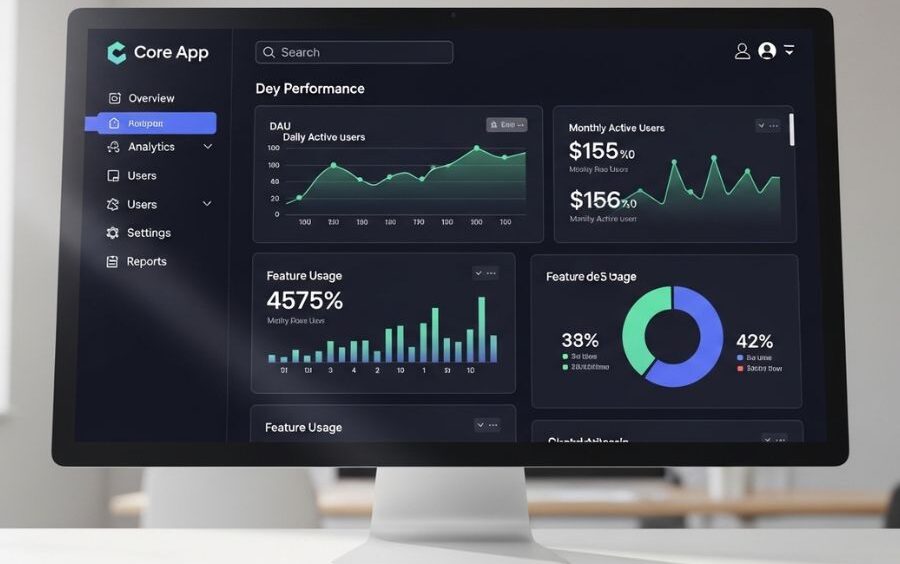
The power of current applications lies in a Core App Dashboard, which allows for to control of the performance metrics, user activity, and most important information in a central manner. It enables teams to track the performance of apps in real time, make decisions based on facts, and enhance the overall user experience. Using analytics, user control, and personalization, it will be necessary to operate the apps efficiently.
This guide covers information such as basic elements and advantages, tools, implementation planning, and future-directed tendencies so that you can construct a dashboard that addresses the specific needs of your app.
What is a Core App Dashboard?
A Core App Dashboard is a monolithic application that is used to give an overview of the performance of an application in real-time. It enables the users and the administrators to monitor the key metrics, user activities, and to control the operations of the apps. It is also an essential tool in the decision-making process as compared to general dashboards, since it is designed specifically to manage apps. When implemented properly, it improves efficiency, usabilit,y and accessibility of data.
Core App Dashboard vs ECSD Core App Dashboard.
A Core App Dashboard is general and can be used by any company, whereas the ECSD Core App Dashboard targets the specialized features of the educational and administrative systems of Escambia County. The two offer analytics and monitoring, although the ECSD versions have extra user permissions and reporting requirements.
Advantages Over the Traditional Dashboards.
Conventional dashboards may not be interactive in nature. Core App Dashboards, in turn, offer real-time information, automated notifications, and custom interfaces that allow making decisions faster and managing apps more readily.
Basic Elements of a Core App Dashboard.
It is constructed using elements that offer total command and knowledge. All of them are used to monitor, manage, and enhance the performance of apps.
Data Visualization Tools
Visual features such as charts, graphs, and tables transform the complex data into an understandable format. They assist users in interpreting trends and insights quickly without doing it manually on raw data.
User Management
This component allows assigning roles, permissions and controlling the access levels to administrators. Effective user administration is a measure that guarantees security and efficiency in the app.
Real-Time Monitoring
Monitoring real-time information and user behavior enables teams to intervene immediately on any errors or performance problems. This guarantees how to ensure the smooth work of your app.
Customization Options
Dashboards should be able to fit into special mechanisms. Core App Dashboards have a customizable layout, widgets, and themes that can be adjusted to the needs of various users.
Integration Capabilities
The close connection to third-party applications, such as CRM, analytics systems, or ECSD-specific applications, enables central operations and unified reporting.
The Advantages of the Core App Dashboard Use.
A Dashboard is not just a graphical representation of data, it is a productivity and efficiency tool. Proper implementation changes the way the apps work and how they are used.
Concentrated Control and Management.
Only one interface enables administrators to check the metrics, control users, and set up settings effectively. This does not require the use of various platforms and manual operations.
Real-Time Data Insights
The ability to receive live updates on the performance of apps, the activity of users, and system metrics allows the teams to identify issues on time and make appropriate decisions.
Enhanced User Experience
Dashboards make the user interface better since they provide the information in a clear manner, less time is taken to navigate, and users can quickly access the data.
Customization and Flexibility.
Widgets, layouts, and themes are customizable to fit workflow-specific dashboards, which enable the end user to feel unique.
Greater Efficiency and Productivity.
There is less repetitive work with the help of automation and centralized data and teams can commit themselves to making decisions and essential improvements in their apps.
Key Features
A Core App Dashboard is developed to add features, which make the dashboard easier to operate and user-friendly.
Analytics and Reporting
Extensive analytics can be used to understand user behavior, app performance, andthe health of the system. Reporting tools permit making informed decisions and trend analysis.
User Administration
Role-based access control provides security to the right individuals with the right permissions to prevent sensitive data while at the same time without compromising operational efficiency.
Notification Center
Centralized notifications alert users about any updates and errors happening in the system and critical events to ensure prompt action.
Third-Party Integrations
The integrations with such tools as Kohezion, ILLA Cloud, and Plasmic enable the data aggregation and workflows consolidation across platforms.
Configurational Controls
Users have the option to customize dashboards in terms of layouts, customizable widgets, and themes so that the interface can fit their particular work.
Tools Comparison Table
| Tool | Type | Key Features | Pros | Cons | Ideal For |
| ILLA Cloud | SaaS | Drag-and-drop builder, real-time data, custom widgets | Easy to use, collaboration-friendly | Learning curve for advanced use | Teams needing fast setup |
| Plasmic | Design-centric | Customizable UI, component library, responsive design | Highly flexible, visual excellence | Can overwhelm non-design users | Design-focused dashboards |
| Kohezion | No-code platform | Data management, custom reports, access control | No coding, secure, customizable | Less modern interface | Data-heavy, no-code apps |
| Tableau | Analytics tool | Interactive visualizations, multi-source data | Powerful analytics | Expensive for small teams | Large enterprises |
| Power BI | Analytics tool | Microsoft ecosystem, real-time insights | Integration-friendly | Limited non-MS ecosystem support | Microsoft users |
| Chartio | Cloud platform | Data visualization, real-time updates | Fast setup, good for small teams | Limited advanced analytics | Cloud-native apps |
Intuitive User Interface
Be simple in navigation and layouts. A good dashboard will be user-friendly, with the essential information being located without any confusion.
Security Measures
To ensure sensitive information is not compromised, introduce multi-factor authentication, encryption, and role-based access.
Scalability
Build scalable dashboards that can support more users, more data, and new functionality as the app becomes larger.
Regular Maintenance
Get user feedback, make improvements, and run security checks to make dashboards useful and pertinent.
User needs customization.
Give users flexibility in the customization of layouts, widgets, and notifications to personal workflows and priorities.
Developing a Core App Dashboard: Step-by-Step Guide.
Define Objectives: Determine KPIs, user requirements, and business objectives.
Select Tools: Select a SaaS application such as Kohezion, ILLA Cloud, or Plasmic.
Design UI/ UX: Implement wireframes and responsive design concepts to use them to develop intuitive interfaces.
Integrate Data: Link APIs and databases to gain real-time time correct information.
Introduce Automation: Automate updates, alerts, and reporting.
Test & Gather Feedback: Test the usability and integration testing with actual users.
Deploy and Maintain: Measure performance and improve the dashboard on a regular basis.
Future Trends
AI & Machine Learning: Insights and anomaly detection.
Predictive Analytics: Real-time vision and planning.
Individualization: Customizable interfaces and layouts.
IoT Integration: A Tool that keeps track of connected equipment and systems in real-time.
Such trends will transform dashboards into smarter and more intuitive decision-making tools.
FAQs
Why do we need a Core App Dashboard?
It is a central place to oversee the app activity and monitor metrics as well as make data-reliant decisions effectively.
What can I do to monitor the performance of users?
Dashboards enable monitoring of user activity and use in real-time, which is beneficial in determining patterns and enhancing experiences.
What are the best tools to use in order to create an interactive app dashboard?
Applications such as Kohezion, ILLA Cloud, and Plasmic provide custom dashboards that have real-time data integration.
Is it possible to make dashboards industry specific?
Yes, dashboards can be customized to healthcare, finance, education, retail, manufacturing processes.
What is the value of dashboards in the operation?
Dashboards save manual labor and accelerate decisions by consolidating important data and automating recurring reporting procedures.
What are the security measures that a dashboard should have?
Role-based access, multi-factor authentication, and encrypted data storage will keep sensitive information safe.
What is the way real-time data monitoring is done?
Dashboards draw live data out of APIs and databases, and are used to display real-time performance or activity information.
Which customization possibilities do we have?
The layouts, themes, notification and widgets can be customized by users to fit their personal workflow preferences.
What role can dashboards play in terms of predictive analysis?
Dashboards can also predict the trends and identify the risks before they happen by using historical data and AI tools.
What is a good way of keeping my dashboard?
Dashboards are updated regularly, users provide feedback and maintenance is performed to keep them accurate, secure, and fully functional.